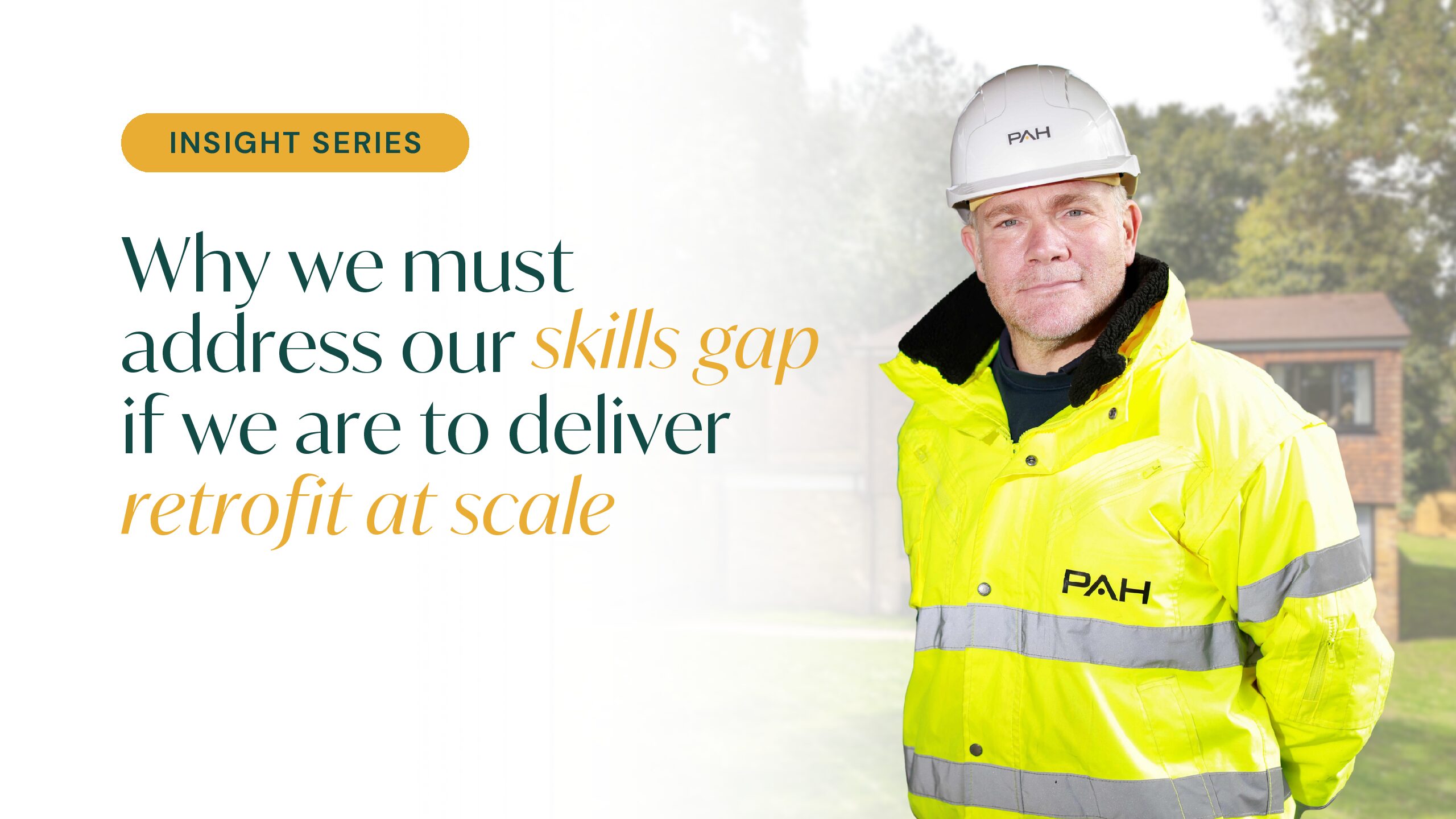
Why we must address our skills gap if we are to deliver retrofit at scale
“With over 29 million homes requiring retrofit measures, it provides a key opportunity for the construction industry to maximise trade jobs to help meet this demand,” says Trevor Wilkins, Managing Director at PAH Building & Construction.
According to the World Green Building Council, 29 million homes are expected to require retrofitting upgrades by 2050 to meet the country’s net-zero targets. As the government overlooks this crucial figure, retrofitting former Ministry of Defence properties offers a practical and time-efficient solution to increase the demand for housing supply. These projects can be completed in as little as 16 weeks, which is significantly faster than the 18 months typically required for new builds. By improving the fabric, installing energy efficiency solutions whilst maintaining the original character of the homes, retrofitting ensures these properties are both liveable, sustainable and future proofed for generations to come.
Retrofitting existing properties
Over half of the UK’s 28 million existing homes pre-date 1965, and over 85% of homes still rely on gas boilers for heating and approximately 50% feature uninsulated walls. Despite the challenges of improving these existing older properties, using innovative design and construction methods is making the process simpler. Commonplace issues in older properties, such as damp, draughts and heat loss, can be effectively addressed with improved insulation methods. Solutions such as sealing masonry with a parge coat and strategically insulating hot water pipes can address these issues head on and help to make homes more comfortable.
The UK housing stock is among the least energy efficient in Europe, which has trapped many households in fuel poverty.[1] Delivering an effective countrywide retrofit initiative would not only benefits the environment but homeowners too, as it would nearly triple the UK’s current rate of energy efficiency, reduce household bills, and reliance on the national grid.
Redeveloping these homes by upgrading existing structures helps avoid the negative environmental impact that demolishing and rebuilding can have, as well as reducing household bills for new homeowners. Enhancing existing buildings would nearly triple the UK’s current rate of energy efficiency both benefiting the carbon footprint and reduce emissions of up to 80%[2].
The retrofit revolution can’t happen without skills
Arguably, one of the greatest challenges facing the industry is the lack of skilled workers. According to the Construction Industry Training Board (CITB), the overall number of extra workers in the construction sector needed for the 2025–2029 period is estimated at 47,860 per year, which is equivalent to 1.8% of the 2024 workforce. This means the UK construction industry needs to recruit the equivalent of 239,300 extra workers over the next five years[3].
As millions of homes require measures to enhance their energy efficiency and benefit the environment, it enables for extensive employment opportunities to help meet the demand of workforce recruitment in the industry. PwC estimates that widespread retrofitting could support 580,000 new roles in the UK, including over 94,000 in trade skills, particularly heating engineers, glazers, plumbers and insulation specialists.
To help bridge the skills gap, our ongoing partnership with Basingstoke College of Technology (BCoT) has seen our team create a dedicated learning space for construction students at our Mindenhurst site in Surrey. Hosting 16 students per workshop, the visits give students the opportunity to tour the previous Ministry of Defence (MoD) homes, and use the designated room to discuss their learnings.
As the government invests in retrofitting as part of climate targets, upgrading existing structures to meet housing standards allows for a range of different trades the opportunity to have that stability of work line. From electricians for rewiring, installing efficient lighting, or integrating renewable energy systems like solar panels, to plumbers who can install energy-efficient boilers, heat pumps, and improve water systems, and carpentersto fit insulation and replace windows and doors.
Retrofitting homes over the next decade will play a crucial role in helping the UK to achieve its net zero goal as the UK government promise to reduce carbon emissions by 78% by 2035. But working towards a greener future not only means benefitting our environment – it gives the younger generation a chance to learn crucial skills within an industry which holds a pivotal position in how our planet is maintained. Four in five homes that will be occupied in 2050 have already been built and most will need retrofitting with low carbon heating systems and energy efficiency improvements for the UK to achieve its emission goals. It is clear that to achieve the UK’s net zero aims, employment needs to be sourced efficiently and providing the younger generation with roles in the industry, they can help play a vital role in a greener future as retrofitting supports the mission for a greener planet.